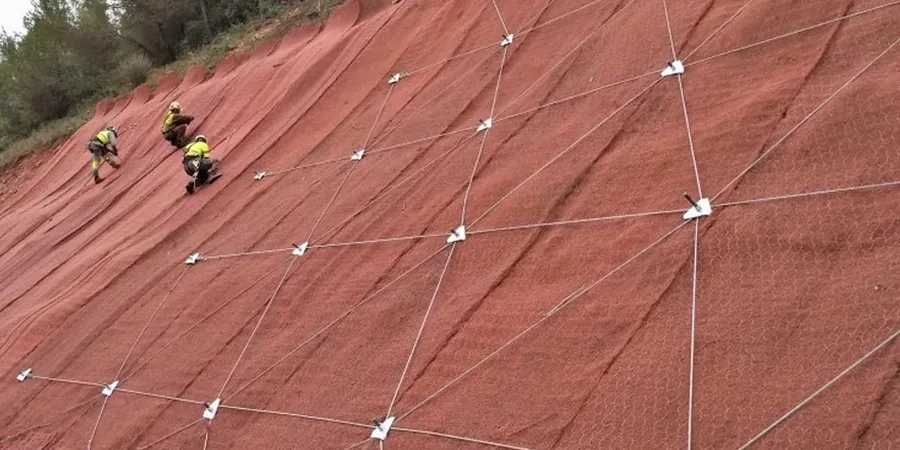
ASCE 7 and the International Building Code set clear expectations for slope stability analysis, but in Lubbock, the local geology raises the stakes. The city sits atop the Llano Estacado, a vast plateau where layers of caliche, silty clay, and sand create abrupt transitions in shear strength. What looks like a stable embankment can mask a weak seam that fails after a few good rains. Our team runs limit-equilibrium models using Spencer’s method to match the site conditions we actually encounter here, not just textbook cases. When fill compaction is suspect, we often recommend pairing the analysis with a sand cone density test to verify that the placed material meets the 95% standard Proctor requirement before finalizing the factor of safety.
On the Llano Estacado, a slope that drains poorly is a slope already halfway to failure — we see it every year after the spring storms.
Local ground factors
What we keep seeing in Lubbock is slope distress that starts with a tiny tension crack at the crest after a dry spell, then turns into a full-blown slide when a thunderstorm drops two inches in an hour. The expansive clay shrinks, opens a fissure, and suddenly the drainage pattern is compromised. Owners sometimes wait until the scarp is three feet high before calling us. By then, the repair costs have tripled. The other quiet risk comes from ponding water behind a slope — many detention basins on the north side of town sit right against residential cuts, and without a proper underdrain, the phreatic surface rises fast. A slope stability analysis that ignores seasonal saturation is just a paper exercise.
Common questions
How much does a slope stability analysis cost for a project in Lubbock?
For most sites within the Lubbock area, a slope stability analysis ranges from US$1,130 to US$3,840, depending on the number of cross-sections, the complexity of the soil profile, and whether lab shear testing is required. A single-family lot with a small cut slope will be at the lower end, while a commercial detention basin with multiple analysis sections falls toward the upper end.
What triggers the need for a slope stability analysis under Lubbock building codes?
The IBC, as adopted by the City of Lubbock, requires a slope stability analysis for any cut or fill exceeding five feet in height, or when a structure is located within the influence zone of a slope steeper than 3:1. Our reports address these triggers directly so your permit package moves without delay.
How long does it take to get results from a slope stability study?
A straightforward analysis with existing soil data can be turned around in 10 to 14 business days. If we need to drill new borings or run direct shear tests on undisturbed samples, the timeline extends to about four weeks. We schedule lab work early to avoid surprises.
Can you analyze an existing slope that is already showing cracks?
Yes. We survey the crack pattern, map the scarp, and install a few shallow borings to capture the moisture profile and failure depth. Then we back-calculate the shear strength at failure and design a stabilization scheme — often a regrade with a toe berm or horizontal drains — that brings the factor of safety above 1.5.