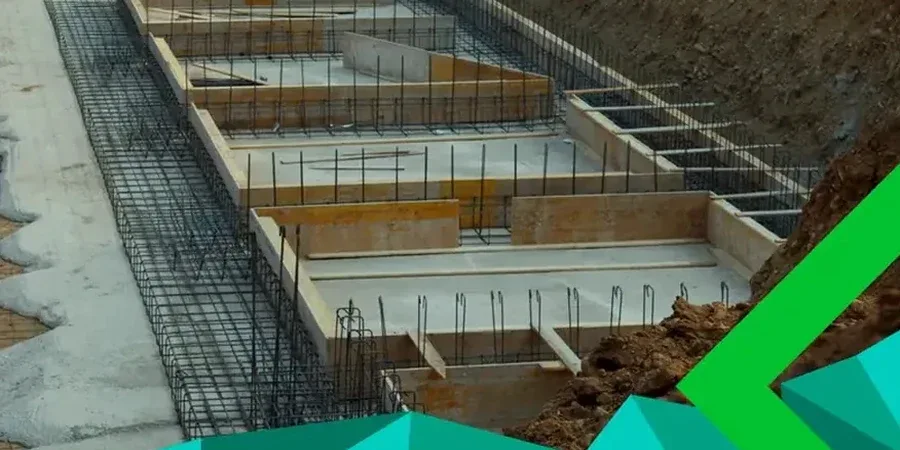
We once worked on a commercial building near the Marsha Sharp Freeway where the contractor assumed standard spread footings would be enough. The Lubbock soil profile told a different story. The upper layer was mostly tight, overconsolidated clay with seasonal volume change potential. We ran Atterberg limits and particle size analysis in our lab. The numbers showed high plasticity. We adjusted the bearing depth and widened the footing strip to keep differential movement within serviceability limits. That is the reality here. Shallow foundation design in Lubbock is not about copying a table from a textbook. It is about matching the footing system to the exact moisture-sensitive soil column on that lot. We combine CPT testing data with lab classification to define the bearing stratum before the concrete goes in.
Lubbock's tight clays demand a foundation that breathes with the soil—rigid enough to carry the load, flexible enough to move without cracking.
Common questions
How much does a shallow foundation design package cost for a single-family home in Lubbock?
For a typical single-family home, the geotechnical investigation and foundation design package ranges from US$2,130 to US$3,580. The final cost depends on the number of borings, lab tests required, and the complexity of the foundation system.
What type of shallow foundation works best on Lubbock's expansive clays?
We commonly recommend a stiffened slab-on-grade or a post-tensioned slab with deepened perimeter beams. The goal is to create a rigid mat that can span over soft spots and resist differential movement caused by seasonal moisture changes.
How deep do you need to place footings to avoid problems with the clay?
We typically set the bottom of the footing between 24 and 36 inches below finished grade. This gets below the zone of maximum seasonal moisture fluctuation and into soil with more stable water content year-round.
Can you use standard IBC presumptive values for bearing capacity in Lubbock?
We do not rely solely on presumptive values. We always verify with site-specific lab testing. The IBC table gives a starting point, but the plasticity and moisture condition of Lubbock clays can reduce the safe bearing pressure below the generic table values.