← Home · Investigation

Exploratory Test Pit Investigations in Lubbock, Texas

Together, we solve the challenges of tomorrow.

LEARN MORE →

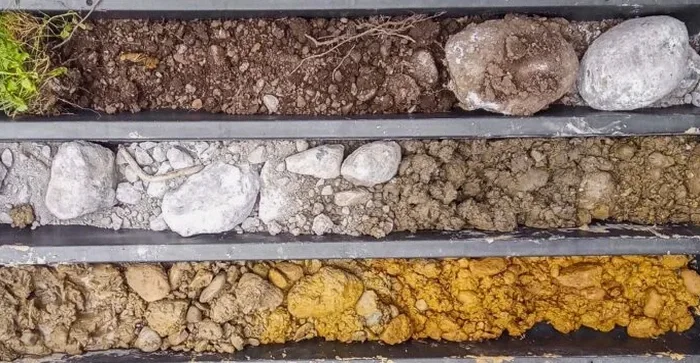
Lubbock sits on the High Plains, and anyone who's broken ground here knows the subsurface doesn't give up its secrets easily. The IBC and ASCE 7 set the framework, but what you actually find in a trench depends on the paleo-playa deposits and that notorious caliche cap. When we excavate an exploratory test pit in Lubbock, we're not just checking a box on the permit application. We're looking at the contact between the reddish Brownfield clay and the underlying Ogallala Formation, measuring the thickness of that cemented hardpan that can fool a drill rig into thinking it hit refusal. A plate load test can later confirm bearing values, but the test pit gives us the stratigraphic context that no borehole log fully captures, especially in the transition zones between the draws and the flat uplands where the soil profile changes within a single lot.

You can't see the caliche variability from a boring log—you have to stand in the pit and look at the contact.

Our approach and scope

In our experience around Lubbock County, the thing that catches engineers off guard isn't the caliche—it's the moisture profile. You can dig a test pit in February and see perched water at six feet in what the USDA maps call a well-drained soil. Come August, that same horizon is bone dry and cracking. Those seasonal swings are what drive foundation distress in slab-on-grade construction across the South Plains, and a test pit lets you log the actual cracking pattern, the root penetration depth, and the oxidation mottling that tells you where the long-term water table really sits. We often pair the visual logging with grain size analysis to quantify the silt content in those interbedded lenses, because a clay labeled 'lean' in the field can turn out to have enough silt to be frost-susceptible—a detail that matters more than people think on unheated warehouse slabs.
Exploratory Test Pit Investigations in Lubbock, Texas
Technical reference image — Lubbock

Local ground factors

Lubbock's growth since the 1970s pushed residential subdivisions into the old agricultural margins south and west of the Loop, and those areas have a complicated depositional history. What we've logged in test pits across those neighborhoods is a patchwork of natural clay, windblown sand from the deflation basins, and—in a few cases—old farm pond linings that nobody recorded on any plat. If you don't open a test pit and physically trace those transitions, you risk designing a footing that bridges two materials with completely different stiffnesses. Differential settlement in Lubbock doesn't announce itself gradually; it shows up as a diagonal crack through a brick veneer within the first two wet-dry cycles. The test pit is your chance to catch that before the concrete is poured.

Need a geotechnical assessment?

Reply within 24h.

Email: info@geotechnicalengineering.sbs

Typical values

ParameterTypical value
Typical pit depth (residential)6 to 10 ft
Typical pit depth (commercial/retail)12 to 15 ft
Caliche layer thickness range0.5 to 4 ft, locally absent in playa depressions
Expansive potential (PI range)Moderate to very high (PI 25–45)
Shallow groundwater occurrenceSeasonal perched; regional aquifer >100 ft
Excavation methodTrack-mounted excavator, OSHA Type B sloping
Sampling standardASTM D1586 bulk sampling per stratum

Related services

01

Expansive Soil Characterization Package

After the test pit exposes the clay horizons, we run a full suite including Atterberg limits, swell-consolidation testing, and suction profiles to give the structural engineer the numbers needed for a properly designed stiffened slab or pier system.

02

Shallow Foundation Verification and Inspection

Once excavation reaches bearing grade, our team returns to proof-roll the subgrade and confirm that the exposed material matches the test pit log. We provide the IBC-required verification letter before the rebar goes in.

Reference standards

IBC 2024 Chapter 18 (Soils and Foundations), ASCE 7-22 Section 12.13 (Site-Specific Geotechnical Investigation), ASTM D1586 (Standard Test Method for Standard Penetration Test), ASTM D2487 (Classification of Soils for Engineering Purposes), TDLR Texas Accessibility Standards (for investigation safety and site access)

Common questions

How much does an exploratory test pit cost in Lubbock?

For a standard residential test pit in Lubbock, you're typically looking at US$510 to US$930, depending on depth, access, and whether we're dealing with heavy caliche that slows the excavator down. That price includes the machine time, the engineering log with photos, and the final report signed by the geotechnical engineer. If we're doing multiple pits on the same lot or combining it with a drilling program, the per-pit cost drops.

How deep do you dig a test pit for a typical Lubbock slab-on-grade foundation?

For most single-family residential work inside the Loop and in the newer subdivisions south of 98th Street, we excavate to 8 or 10 feet below existing grade. That gets us through the entire active zone of the expansive clay and into the caliche or the upper Ogallala, which is what the IBC requires for a site-specific investigation.

Do I need a test pit if I already have SPT borings on the same site?

They complement each other. An SPT boring gives you blow counts and a disturbed sample every few feet; a test pit gives you a continuous, undisturbed view of the stratigraphy across the full trench wall. In Lubbock, where the caliche can be discontinuous, we've found boulders or solution cavities in a test pit that a boring drilled right past.

What happens if you hit groundwater during the test pit excavation?

On the High Plains, true groundwater is deep—often 100 feet or more. What we do encounter in Lubbock test pits is perched water, usually after heavy rain or irrigation, sitting on top of a clay lens. If we find it, we log the depth, note the seepage rate, and collect a water sample for sulfate and pH testing if the foundation design calls for sulfate-resistant cement.

How quickly can you schedule a test pit and deliver the report?

Normally we can have the excavator on site within three to five business days of the signed authorization. The field log and photos go to the client the same day, and the sealed engineering report follows within a week. If you're on a tight construction schedule, we can expedite the report for a next-day turnaround.
Location and service area

We serve projects in Lubbock and surrounding areas.

View larger map